 SCREEN ACADEMY
Screen Academy
Screen acting classes in Sydney, taught on a working film set
Most acting classes teach you to act. Ours teach you to act for the camera, on a real set, with a real crew, and you leave with the footage to prove it.
JJ Splice Screen Academy runs its classes inside a purpose-built production studio in Surry Hills, five minutes' walk from Central Station. Eight actors per class. RED Digital Cinema cameras. Every scene directed by Dean Francis, a twice AACTA-nominated feature film director who has been shooting actors' showreels since 2012.
What screen acting training actually is
Screen acting is a different discipline from stage acting. The camera is close, the frame is small, and the performance has to survive being broken into set-ups and takes, then rebuilt in an edit suite by someone who was never in the room. An actor who understands that process is easy to direct, easy to cut, and gets asked back.
That is what we train. Not just the inner work of character and truth, which matters as much as ever, but the technical craft around it: eyelines and frame size, continuity, hitting marks without looking like you are hitting marks, repeating an action take after take and keeping it alive, knowing what a 25mm lens does to you compared with a 200mm. You learn it by doing it on set, not by hearing about it.
How a class runs
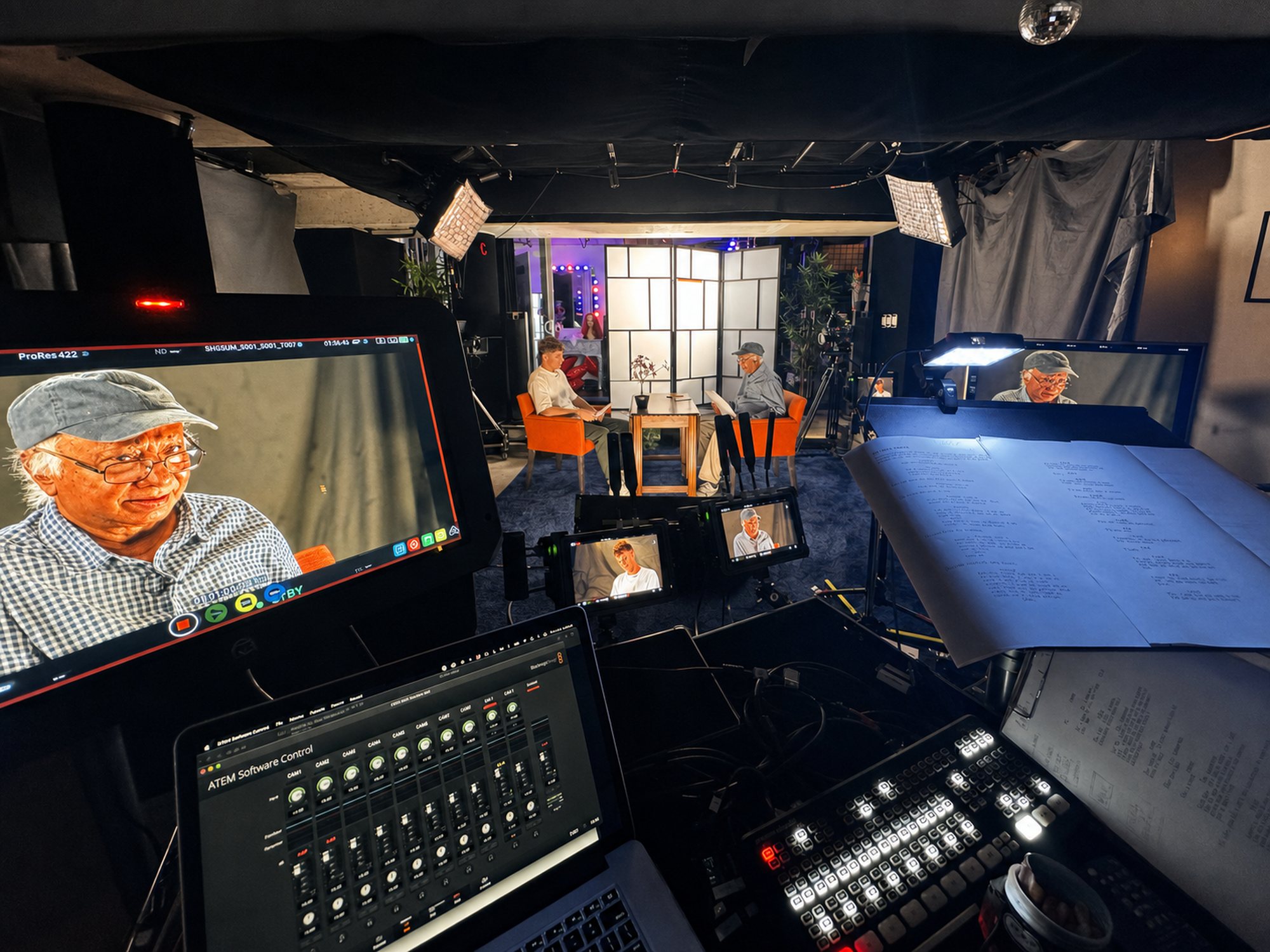
Classes are on weeknight evenings, 6pm to 9pm, so they fit around a day job. You work in a group of no more than eight, with a scene partner, on a scene from a real screenplay. Early sessions are rehearsal and scene work in the studio, filmed on a two-camera set-up that is switched live in front of the group, the way sitcoms and soaps are shot. You watch it back on a 10-foot screen with the room, which is confronting the first time and the fastest way to learn we know.
Then you shoot. Your scene is filmed single-camera, with cinematic lighting and multiple set-ups, exactly the way motion pictures are made. When you are not in front of the camera you are on the crew: sound recordist, first assistant director, continuity, gaffer, production designer. You learn what every department needs from an actor by being that department for a night.
What you leave with
A finished, edited, colour-graded, Cinema-Quality Showreel scene that you own and can send to agents and casting directors. On the eight-week Foundation course that is one scene; on the thirty-week Screen Craft Intensive it is two scenes and two monologues, plus a page on casting.directory where industry can watch your work. Both courses end with a screening night where your scene plays on the big screen to an audience.
Who the classes are for
Actors over 18 (17 is considered case by case with a parent or guardian involved). You do not need experience for Foundation. Screen Craft Intensive is for actors with some screen experience or prior training, and there is a short intake interview before you are offered a place. What both courses need is the same: you turn up to every session, you learn your lines by week three, and you do the work between classes.
Two courses
Screen Academy Foundation is eight weeks, one night a week, and ends with one Showreel scene. It is the entry point and the place to find out whether this is the path you want. Screen Craft Intensive is thirty weeks, two nights a week, with two production blocks, time in the edit suite with the director, international guest sessions, and two Showreel scenes and two monologues at the end. The course comparison page sets them out side by side.
Where and when
56 Buckingham Street, Surry Hills. Train, light rail or bus to Central Station, then a five-minute walk. Street parking is free after 5pm but limited. Intakes run several times a year; current dates are on each course page.
Apply
Places are limited to eight per intake. Apply now, or read how to choose an acting school if you are still weighing it up. More about the studio and the director on the About page.
Still have questions?
Talk to us before you apply.
Every applicant goes through an intake interview — it's a two-way conversation, not just an audition.
Apply Now