 SCREEN ACADEMY
A buyer’s guide
How to choose an acting school in Sydney
There are good acting schools in Sydney and the right one depends on what you want out of it.
Rather than tell you ours is best, here are the eight questions we think you should put to any school, including us, and our honest answers.
1. How many actors are in the room?
Screen acting is learned by doing and by being watched closely. In a class of twenty you might get on your feet twice a night. Ask for the maximum, not the average. At JJ Splice the maximum is eight, and an intake may be postponed if fewer than six places are filled, because the work is built around a small confirmed group.
2. Who actually directs the scenes?
A school can have an impressive founder and still have your classes run by someone else. Ask who will direct your scene on the night you shoot it. At JJ Splice every scene is directed by Dean Francis, a feature film director with two AACTA nominations who has also taught at NIDA, AFTRS and other Sydney schools.
3. Do you shoot on a real set, with real equipment?
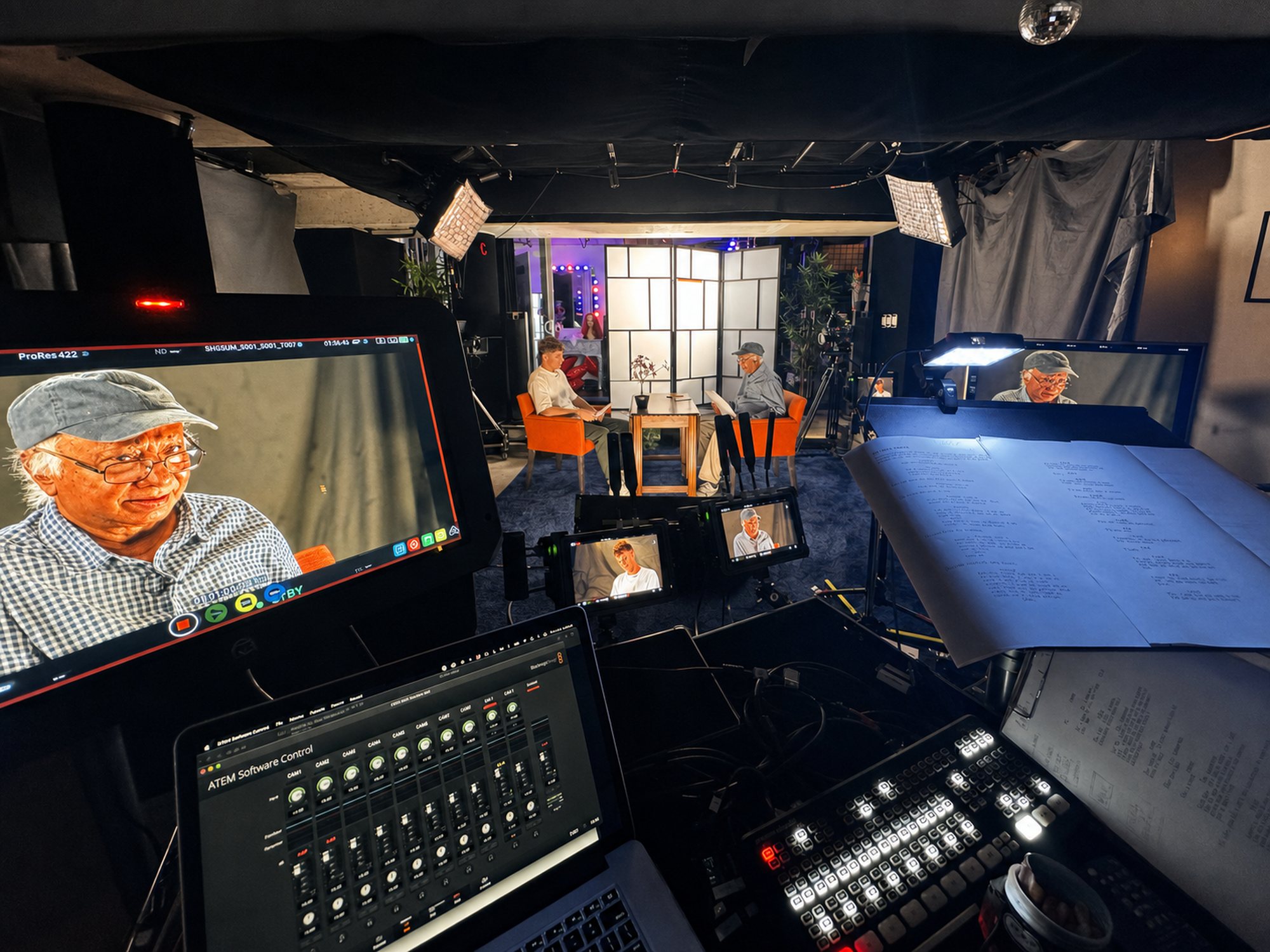
"Filmed" can mean a phone on a tripod. Ask what cameras, what lighting, what sound, and whether the shoot is single-camera with multiple set-ups, which is how film and television are made. Our studio in Surry Hills is a purpose-built production space; scenes are shot on RED Digital Cinema cameras with wireless lapel microphones and professional studio lighting, and the showreel shoots are single-camera over multiple set-ups and takes.
4. What do you leave with?
Ask for something concrete. A certificate is not useful to a casting director; a finished scene is. Foundation students leave with one edited, graded, Cinema-Quality Showreel scene. Intensive students leave with two scenes, two monologues, ten weeks of workshop recordings and a page on casting.directory.
5. Will I learn the technical side, or only the acting?
Actors who understand lenses, lighting, blocking, continuity and coverage are easier to work with and get asked back. Ask whether the course teaches those and how. In the Intensive there are dedicated nights on lighting, lenses, blocking and coverage, and students take crew roles on every shoot night so they learn what each department needs from an actor.
6. Can I see myself before I commit?
Watching your own work back is where most of the learning happens. Ask whether classes are recorded and whether you can review them. Our scene work is filmed on a two-camera set switched live, played back on a 10-foot screen with the group, and the recordings are in your MySplice app most weeks.
7. What does it cost, all in, and what happens if I leave?
Ask for the full price, the payment options and the withdrawal terms before you sign anything. Foundation is $187 a week for eight weeks ($1,496) or $1,421 upfront. The Intensive is $209 a week for thirty weeks or $5,956.50 upfront. Both are a commitment to the full term: the course is planned around a confirmed group of eight, so if you withdraw part-way the remaining fees stay payable. You have 24 hours after your intake interview to change your mind for a full refund.
8. Who is it for, honestly?
A good school will tell you if you are not the right fit. Foundation needs no experience and suits actors starting out or testing whether they want more. The Intensive is for actors with some screen experience or training and there is an intake interview; if you are not ready, you may be offered Foundation first. The Academy is for actors 18 and over, with 17-year-olds considered case by case.
Where to go from here
Read about the two courses side by side, look at what the classes are like, or check the FAQ. When you are ready, apply or book a free strategy call and ask us these questions yourself.
Still have questions?
Talk to us before you apply.
Every applicant goes through an intake interview — it's a two-way conversation, not just an audition.
Apply Now