 SCREEN ACADEMY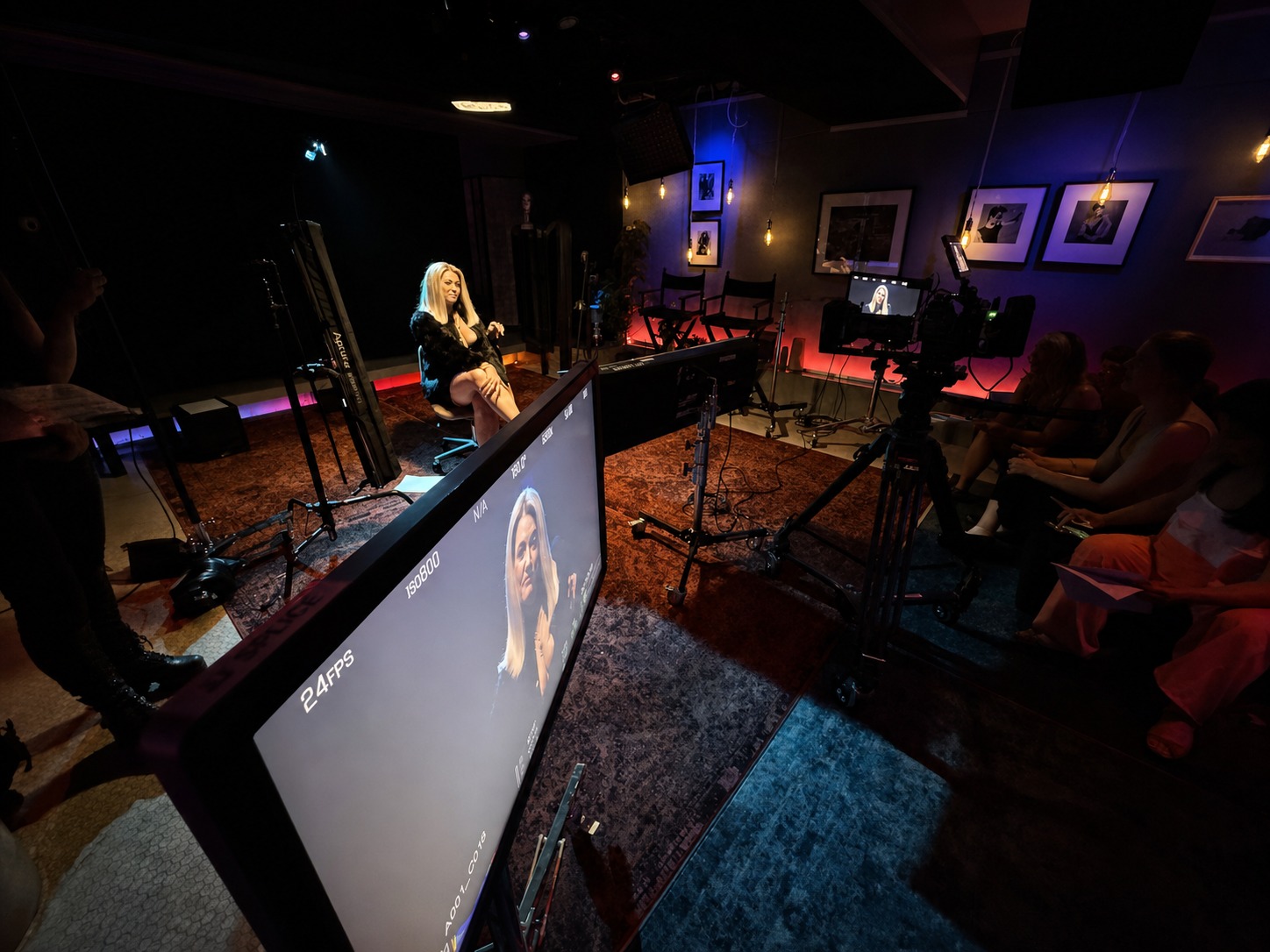
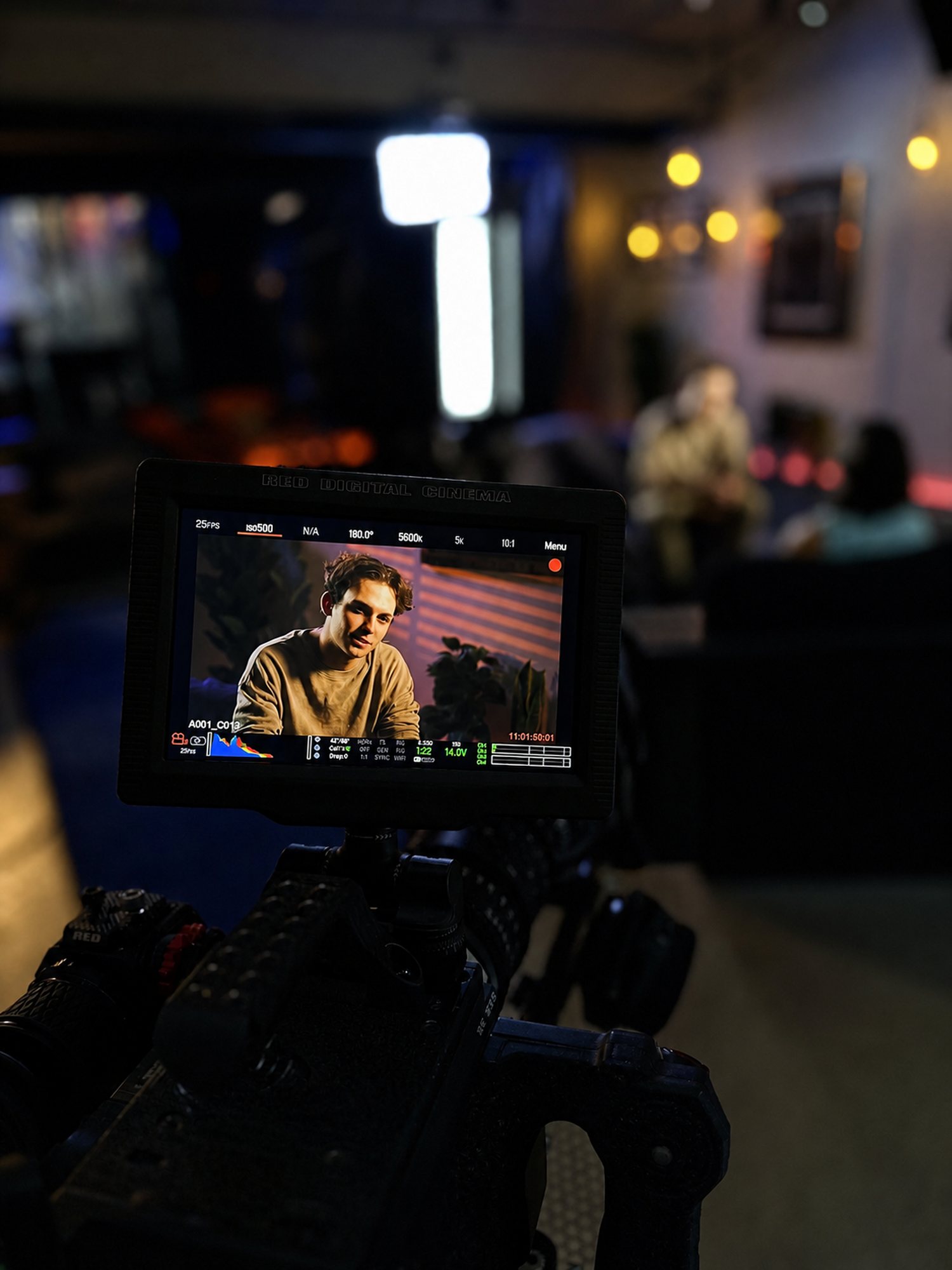
Real world on-set experience
Screen Craft Intensive
Your professional practice develops in sympathy with the technical and creative demands of screen acting.
Who it's for
Actors with some experience acting on screen, or some previous training.
When it is
Monday and Tuesday evenings, 6:00pm–9:00pm, for 30 weeks.
How much it is
$209 per week, incl. GST.
Or $5,956.50 upfront (with 5% discount for upfront payment).
What you get
- 168 contact hours of intensive training
- 2 two-hander Showreel scenes
- 1 monologue
- 10 weeks of filmed, high-quality workshop footage
- Your own personal online portfolio to send to agents, Casting Directors and production companies
Why the Screen Craft Intensive works
The Screen Craft Intensive, developed by acclaimed director Dean Francis over many years, has two outcomes: it nurtures you to develop your own personal approach to text and character, while equipping you with the technical craft skills to deliver a performance that is consistent, repeatable and memorable.
This is the only way to become the actor that directors always want to work with. You'll be an asset to any production because you work efficiently and consistently, with absolute empathy for the multitude of technical and creative processes on a film set.
And you discover the truth of a scene and convey it with simplicity and nuance — every time.
Your teacher has developed a method of guiding you through the discovery of character and story, while simultaneously equipping you with the technical skills that differentiate aspiring actors from true screen acting professionals.
You'll work in the studio two nights a week.
The first night is focused on character and your inner life as an actor. The second night is focused on the externals of screen acting — the technical craft that translates your performance to the screen.
The journey
Two nights a week.
Every week has an A night and a B night.
Night A works your inner life as an actor — character, story, truth. Night B works the externals — the technical craft that gets your performance onto the screen intact. In Phase 2 that rhythm sharpens: Night A becomes pure scenework, applying everything you've learned, while Night B goes deep on the specific technical skills — lighting, lenses, blocking, editorial — that feed directly back into it.
Weeks 1–6 · 2 nights per week
1A
An introductory class where you come out with an understanding of the power of doing nothing on screen.
1B
Discover what script analysis looks like from the perspective of the screen actor, and how to trust your instincts under pressure.
2A
Uncover the hundred-year-old secret to creating an intentioned, varied performance — the tight structure that holds continuity together but lets you discover it fresh every time.
2B
Go deep into the inner life of the character and discover that the character is you. Free yourself from the text so you can rediscover it anew each take.
3A
Unlock the freedom of absolute discipline via a deep dive into improvisational screen acting technique.
3B
Embrace the complications of working with props, and discover how to fuse them with your dramatic beat analysis and deep character instincts.
4A
Step into the shoes of the continuity supervisor and the editor, and gain a whole new perspective on the importance of repeatable action — and how repeating an action is a freeing process that enhances spontaneity.
4B
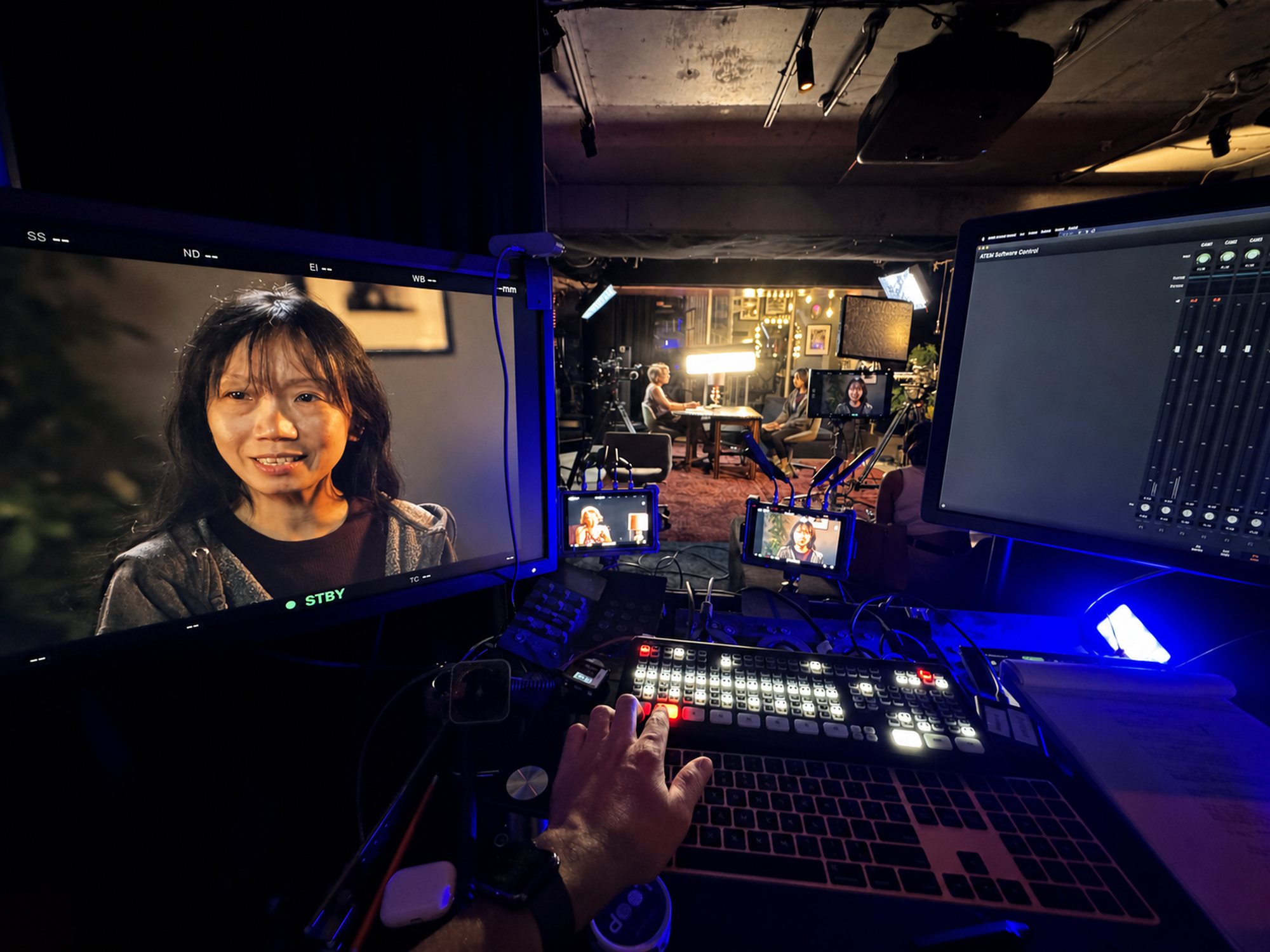
Intense scenework, firm but gentle direction, a nurturing playground for discovery — while working on a multi-cam set that's switched live in front of the group.
5A
Go deeper with your scenework, and experience your work for the first time on the cinema screen in front of an audience.
5B
Continue the journey deeper into your scenework, with the group's eye now sharper and the debrief more exacting.
6A–6B
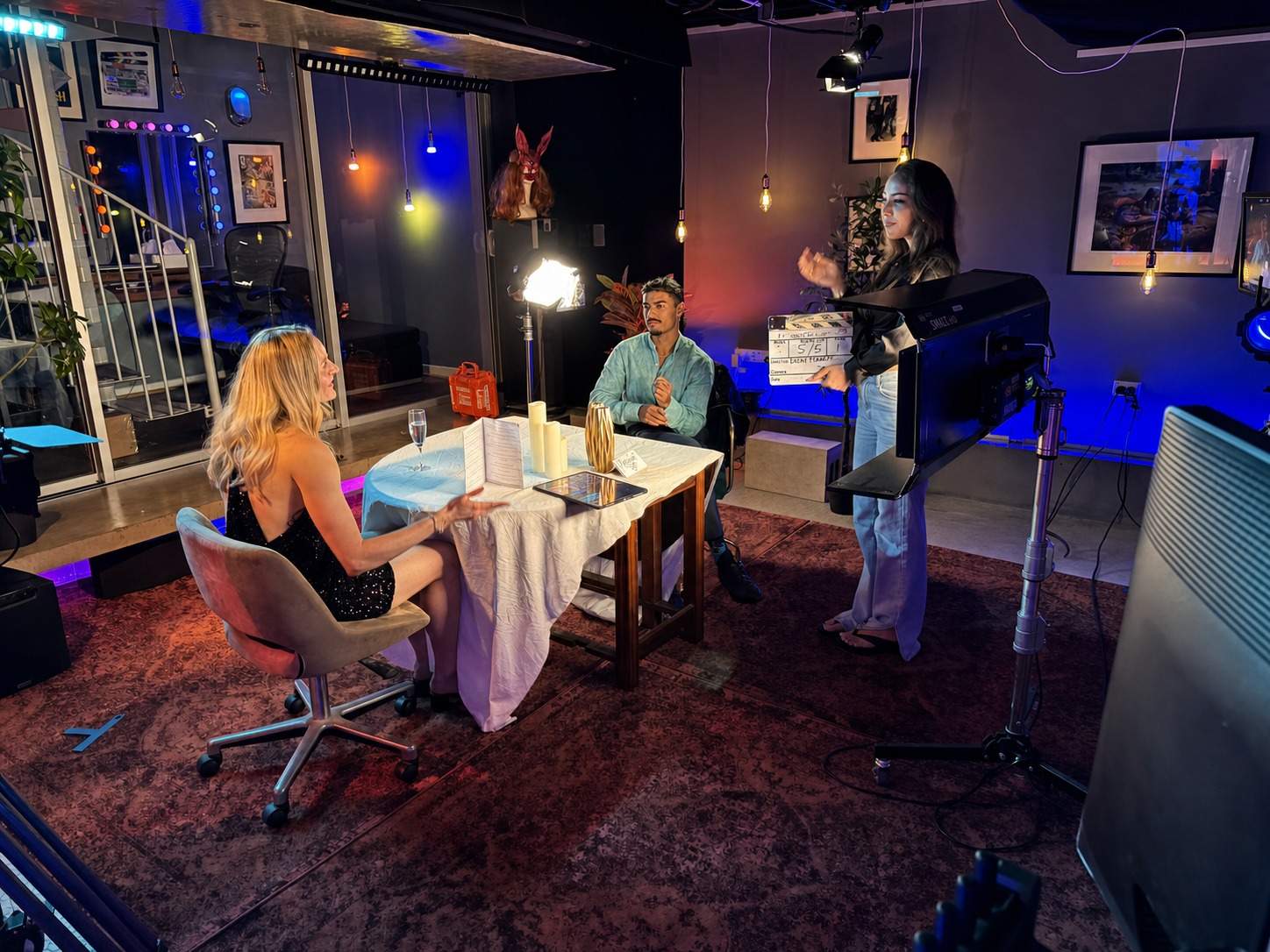
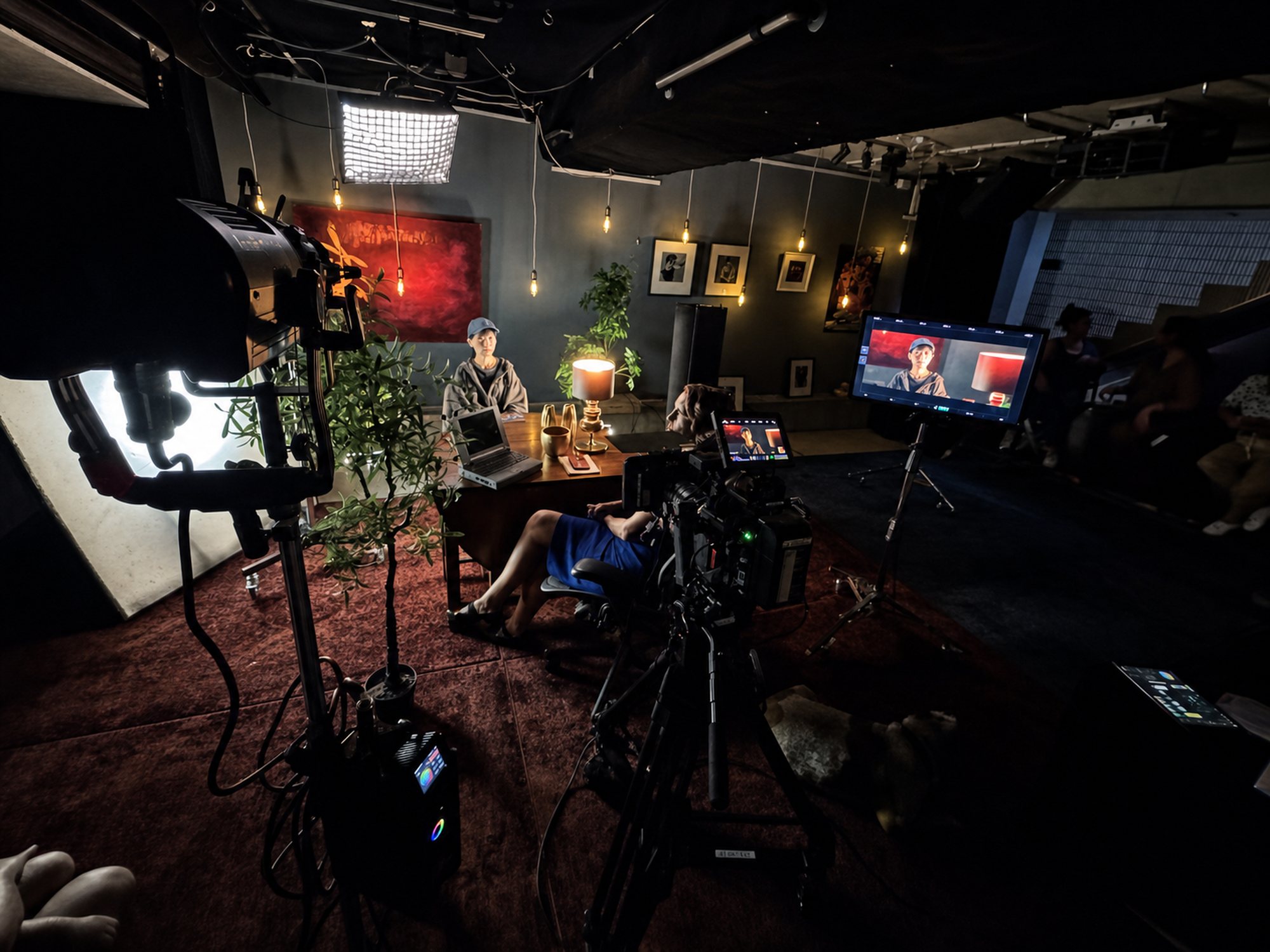
Play out your scene on the soundstage in full costume, with props and lighting — a rare dress rehearsal for the shooting cycle ahead. When you're not performing, you take on a literal crew role, learning the roles and responsibilities of a real, live set.
Weeks 7–8 · Offsite, via Zoom · 1 night per week
You train with a completely fresh, international perspective
Two remote sessions that you join from the comfort of your own home, with guest actors and tutors joining live from around the world. You get a completely different perspective on the craft, often receiving specific feedback on the work you've filmed in previous sessions. A truly unique opportunity to widen the frame on your own work and generate ideas to bring back to the studio for the next phase of training.
Weeks 9–13 · Scene production period · 1 night per week
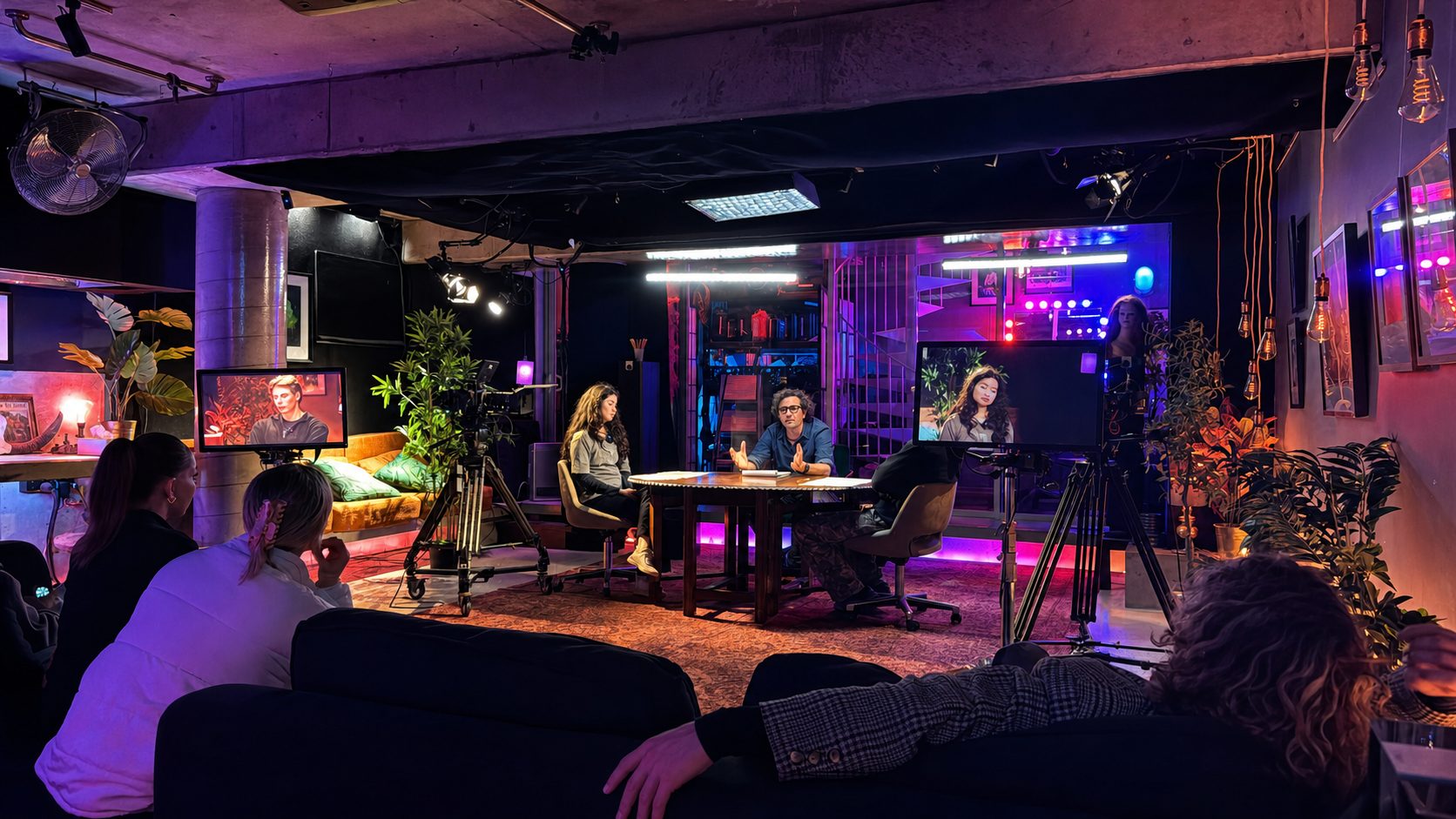
You film your scene, single-camera, cinematic
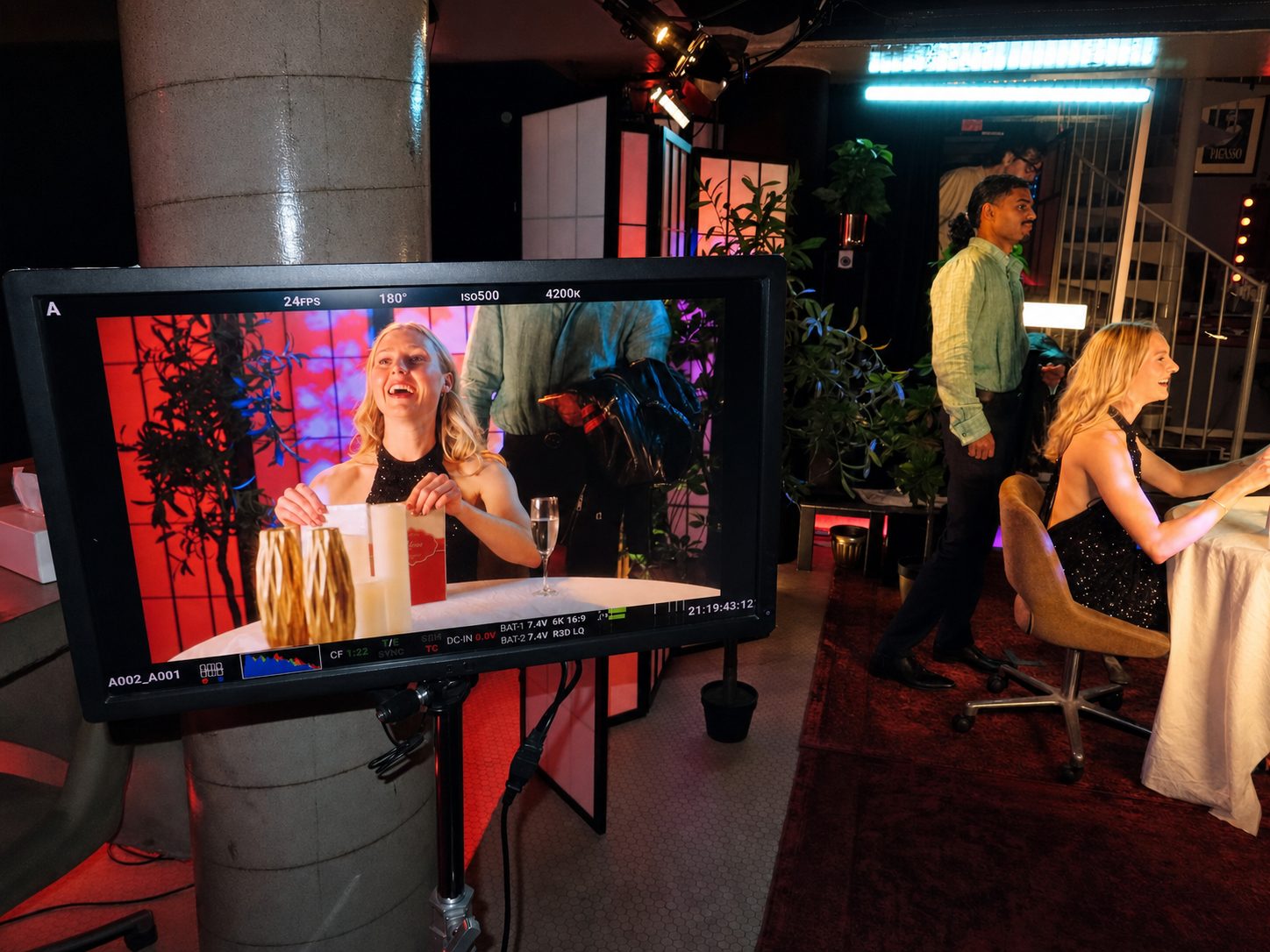
You shoot your scene single-camera with cinematic lighting and mise-en-scène, engaging the full palette of film production tools and techniques. We film one scene with two actors per session. When you're not shooting, you're playing a vital role as a crew member, deepening your understanding of the film set in a way no lecture can.
A unique opportunity · The editorial suite
You sit in the edit — the only course that offers this
This is the only acting course in the world where you attend a professional editorial suite and collaborate with the director on the scene, in bonus sessions from 3pm on the day of each shoot, from Week 10 onward. You come out with a crucial understanding of the filmmaking process from arguably the only perspective that counts: the editor's.
Cruel people have said the Best Actor Oscar should really go to the editor. Here, you'll find out if that's true — and why.
Week 14 · Screening night
Week 14 is where it all comes together. Your work on a big screen. With an audience. And a press gallery.
Lights down, popcorn, sparkling wine. A small supportive audience. A mock media junket. You present the work to the group as if you were at an A-list film festival. You get media trained on how to discuss your achievement. You get affirming feedback and provocations. And then we talk about what you want to do next.
You see your own work from a completely fresh perspective — and start planning what's next. Then you pair up with your scene partner to find and agree the scene you'll shoot together in Phase 2.
Weeks 15–16 · International guest lectures · 1 night per week
You receive state-of-the-art training from a working guest actor or teacher
Two weeks of guided self-reflection, punctuated by live remote sessions with high profile local and international guest lecturers.
During this phase, you collaborate with your classmates and choose your team and scripts for the next phase of training and shooting.
Weeks 17–22 · 2 nights per week
17A
Lock in your own choice of script and scene partner and set your challenges for the second part of your screen acting journey.
17B · Lighting
Discover how light fundamentally changes the way your performance is read by the camera and perceived by the audience. Learn to manipulate your own lighting on set and work in harmony with the Director of Photography, for a truly collaborative relationship that adds nuance and detail to every cinematic moment.
18A
Go deeper into your scene and fully embrace the trust of your scene partner — strip it back to your own words and rediscover what's actually underneath it.
18B · Lenses
Understand the specific difference between a 25mm lens and a 200mm lens, and what it does to your performance. Develop the intuition to know what your shot looks like without ever checking a monitor — and become the director's best friend by making subtle adjustments to suit the frame size.
19A
Employ your newfound technical skills to unearth new textures in your scenework — and discover how much of what reads as intimacy, threat or power was never about the acting alone.
19B · Blocking
A deep dive into the fundamentals of physical blocking — when to move, how to move, how to develop consistency of movement, and when not to move. Learn how to take blocking direction and internalise it, so every movement comes from a real impulse.
20A
Embrace the discipline of your craft training and find freedom in technical precision — run your scene with every move now instinctive, so nothing pulls you out of the moment.
20B · Coverage & editing
Understand the principles every screen director uses to plan coverage and plan the day. Learn what every film editor craves from a set, and how to satisfy it — so you'll anticipate the coverage plan and know exactly where to spend your energy on the day of shooting.
21A
Bring what you now know about coverage straight back into the scene — play every beat with an editor's eye already switched on, and discover how much sharper your scenework becomes for it.
21B · Workshop
A consolidation night. Lighting, lenses and blocking come together in a full workshop and screening cycle, so every technical skill you've picked up this phase is tested together, on camera, before you move into coverage and editorial next.
22A
One final scenework round before production — the last polish before the camera rolls for real.
22B · Self-tape
Distill everything you've learned into the most basic yet fundamental task: capturing an unforgettable performance in your own home, on basic equipment — for real, on the day, in front of the group. Then watch it back together and close the gap between what you felt and what the tape shows.
Weeks 23–24 · Offsite, via Zoom · 1 night per week
Get an international perspective on your work
A second round of international guest sessions, live via Zoom — but this time you've been through a full production cycle, and it shows in what you ask and what you're ready to hear. Same principle as Weeks 7–8: real training from outside the room, and this will inform your work in the final mile of the course coming up.
Weeks 25–29 · The shoot · 1 night per week
You leave with a portfolio, not a certificate
This shoot is the culmination of everything you've learned across the past 24 weeks. Your second Showreel scene, shot single-camera with cinematic lighting and mise-en-scène — a complex, emotionally demanding scene that becomes the most important piece of work in your career so far. When you're not shooting, you're in the crew, exploring a different role each week and supporting your fellow performers.
Week 30 · Graduation
A huge night
Graduation at JJ Splice involves Champagne, a media junket, your work on the big screen, a larger audience and industry guests. Bring a plus one! What leaves the building with you: two finished two-hander scenes, a monologue, and a personal online portfolio built to go straight to agents, Casting Directors and production companies.
Week 33 · Bonus · Group Zoom
Your next steps, and how to actually step into the industry
Two weeks after graduation, the cohort reconvenes on a group Zoom to talk agents, Casting Directors, and your next steps as a working actor. It's also where you decide, together, whether you want to take on the extension: making a short film as a group. More info coming soon — but if the cohort is up for it, there are no limits.
What you'll actually learn
Technique and camera-craft, woven together in a singular learning experience.
Every Screen Craft session sits in one of these three areas — woven together night by night rather than siloed into separate units.
- You come out with:
- 2× professional Showreel scenes
- 1× monologue
- An online portfolio of your work ready to send out to agents and Casting Directors
On-set & technical
- Continuity
- Lighting & how to find your key
- Camera lenses & coverage
- Blocking & hitting marks
- Working with props
- Set etiquette & crew roles
Craft & performance
- Script analysis & breakdown
- Beat, intention & tactic work
- Character development
- Improvisation
- Playing actions, not emotions
- The 18 Dean Francis Principles
Industry & business
- Self-tape setup & technique
- Understanding the edit & coverage
- Agents, castings & call sheets
- Guest actor industry Q&As
- What Casting Directors watch for
- Preparing to work with other directors
Applications open
Ready to see what you're capable of?
Places are limited to 8 students per cohort. The next intake fills fast.
Apply Now